Decide by task location and enclosure
- Can the generator or light tower sit below or away from the task? Distance affects cable length, voltage drop, and mast height.
- Is the area enclosed or partially enclosed? In Springfield, underground and interior logistics spaces favor electric lighting and ventilation‑friendly power strategies; open lots allow conventional light towers and engine packages.
Local conditions that change the spec
- Underground and interior work: Cooler, stable air and long sightlines favor LED light heads with neutral color temperature. Noise and exhaust sensitivity push toward battery or hybrid power, or generators positioned remotely with cabling into the work zone.
- Ozark slopes and gravel yards: Uneven ground around job trailers and laydown yards drives the need for towers with wider stances and towable frames rated for rough approaches.
- Seasonal humidity: Electrical connections, cabling jackets, and inlet protection should match the regional climate to limit condensation and corrosion around connectors.
Generator planning checkpoints
- Load type: steady lighting and electronics behave differently than motor starts. Identify peak and continuous loads before sizing.
- Route and placement: measure gate widths, ramp grades, and turning radii for towables. Note whether the unit must pass through dock doors or roll on slab floors.
- Runtime window: plan for overnight security lighting versus intermittent construction tasks. Fueling intervals or battery swap cycles follow from that window.
Light tower planning checkpoints
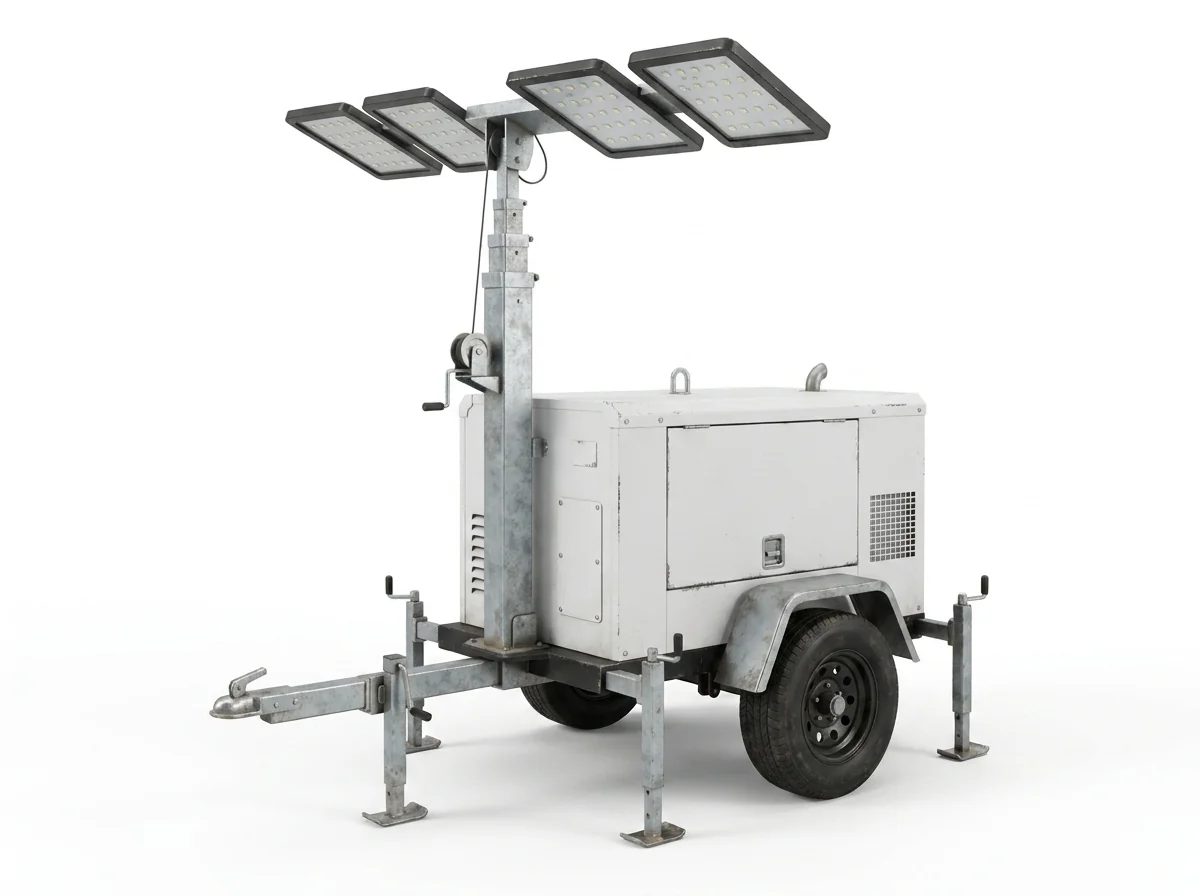
- Mast height vs. shadows: tall racking and bay signage inside local distribution buildings create deep shadows. Map aisles and aim points to determine head count and mast height.
- Glare control: neighbors, roadways, and dock lines need cutoff shields or lower mounting to reduce spill.
- Power source: pair towers with a site generator or use integrated engines where ventilation and exhaust clearance are acceptable.
Related lift access
If lighting or power supports elevated maintenance, compare platform needs: - Interior aisles and polished slabs: see /electric-scissor-lift-rental/ and /vertical-mast-lift-rental/. - Graded outdoor lots and berms: see /rough-terrain-scissor-lift-rental/ and /boom-lift-rental/.
What to note before you call
- Site type (underground, interior warehouse, exterior lot)
- Surface (slab, compacted gravel, mixed)
- Access route (dock door sizes, ramp slopes, tow vehicle limits)
- Load list for generators; target lux zones for towers; expected runtime
Actual site conditions and the selected unit’s instructions govern setup and operation. Coordinate with project procedures when working near traffic, loading areas, or elevated tasks.